First among the Five Sacred Peaks, and a thousand-year promise of sunrise.
Tai is not the highest mountain in China, but it is the heaviest in Chinese hearts.
More people climb Tai at night than by day. A line of flashlight beams winds from the foot of the mountain to the South Heaven Gate. The Eighteen Bends are steep and long; when you tire, stop and look at the stars — brighter here than in any city.
The sunrise at Jade Emperor Peak is the mountain's most generous gift. The sun jumps out from the edge of the cloud sea — first red, then gold, finally lighting the whole expanse. People are speechless, or applaud softly; every bit of exhaustion is worth it.
Mount Tai stands at about 1,500 metres — not the highest of the Five Sacred Peaks, but the weightiest in Chinese hearts. Emperors climbed it to speak with heaven: Qin Shi Huang, Emperor Wu of Han, Tang Xuanzong and Song Zhenzong all performed the fengshan ceremony here. Poets and scholars regarded climbing Tai as a lifelong wish, and Du Fu's line 'Once on the summit, all mountains look small' made it the symbol of ambition and distance.
The mountain is also a natural museum of calligraphy. From the Dai Temple at the foot to Jade Emperor Peak at the top, more than two thousand inscriptions survive in every script — seal, clerical, regular and cursive. The Diamond Sutra in the Scripture Valley is carved across a stone terrace of more than two thousand square metres with characters as large as bushels; the four characters 'Five Peaks Supreme' at the summit are almost a second name for the mountain.
There are two classic routes to the summit. The ancient imperial road from Hongmen Gate runs about 6,600 steps with dense historical sites, ideal for a first visit; the bus from Tianwaicun to Mid-Heaven Gate saves energy, from where you walk or take the cable car to South Heaven Gate. Many people climb at night to reach Jade Emperor Peak before dawn and watch the sun rise over the sea of clouds.
At the foot of the mountain stands the Dai Temple, called the 'First Temple under Heaven'. Its Tiankuang Hall ranks with the Hall of Supreme Harmony in the Forbidden City and the Dacheng Hall in Qufu as one of China's three great palace buildings, and the Song-dynasty mural 'Procession of the God of Mount Tai' survives to this day. Give the temple half a day before or after the climb.
The sunrise is the reason so many climb at night. On the mountain path, flashlight beams form a moving river of stars; at Jade Emperor Peak, the crowd waits quietly in the cold. When the east turns pale, the cloud sea glows rose, and the sun leaps out, lighting the whole valley — at that moment, every bit of fatigue is worth it.
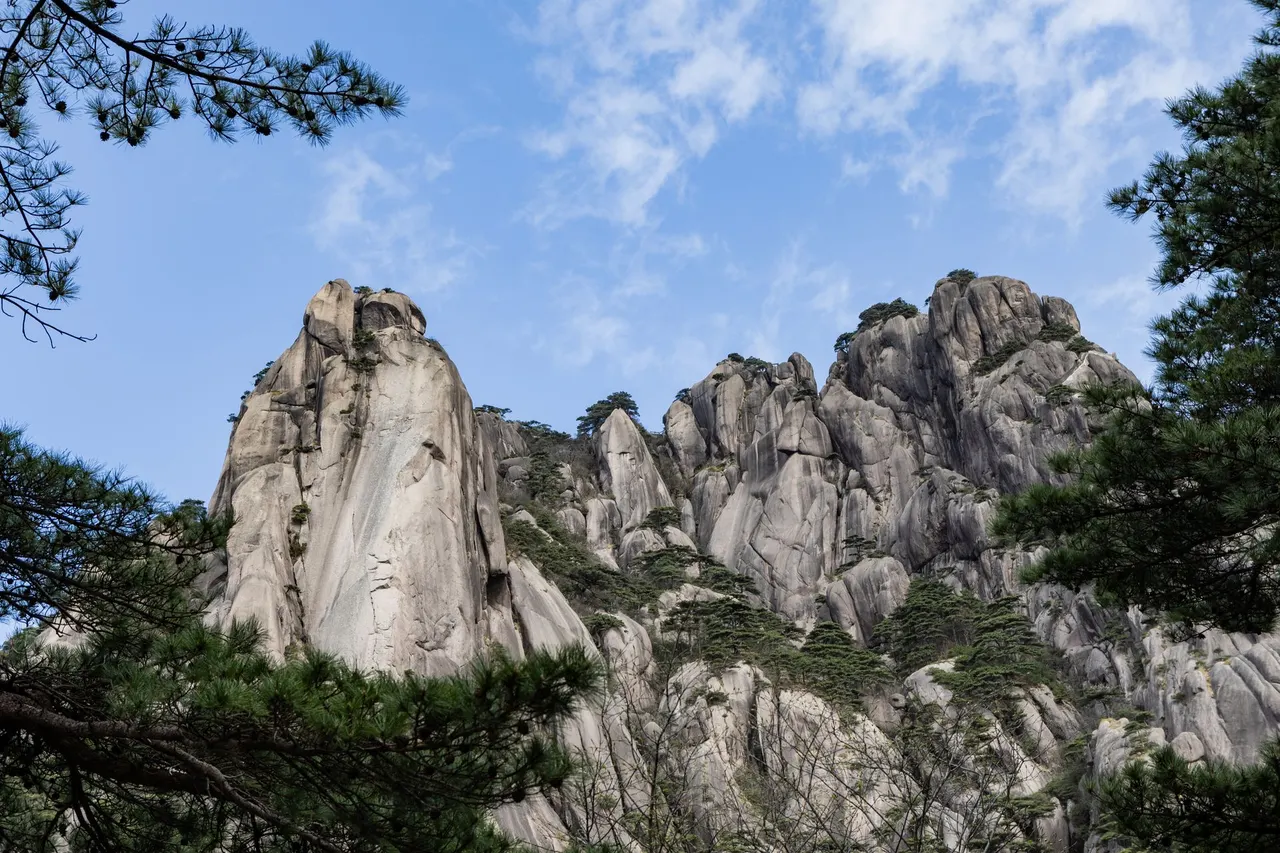
The pines and rocks of Tai are also worth a careful look. The Pine of Hope reaches out its branches like a greeting; the legend of the Five-Foot Pine gives an ordinary tree a place in history. The stone archways of Heaven Street, the incense of Bixia Temple and the inscriptions of Sun Viewing Peak all carry the footprints of the past.
Two thousand years of words are carved into Tai. Emperors and scholars left inscriptions since the First Emperor's Feng Shan sacrifices. The stone has been worn by wind and rain, but the four characters for Supreme of the Five Peaks remain clear, standing as steady as the mountain itself.