In 1974, a clay head dug up by farmers in Shaanxi revealed the face of Qin Shi Huang's underground army.
Eight thousand figures, not one face repeated — they have kept guard for an empire for two thousand years.
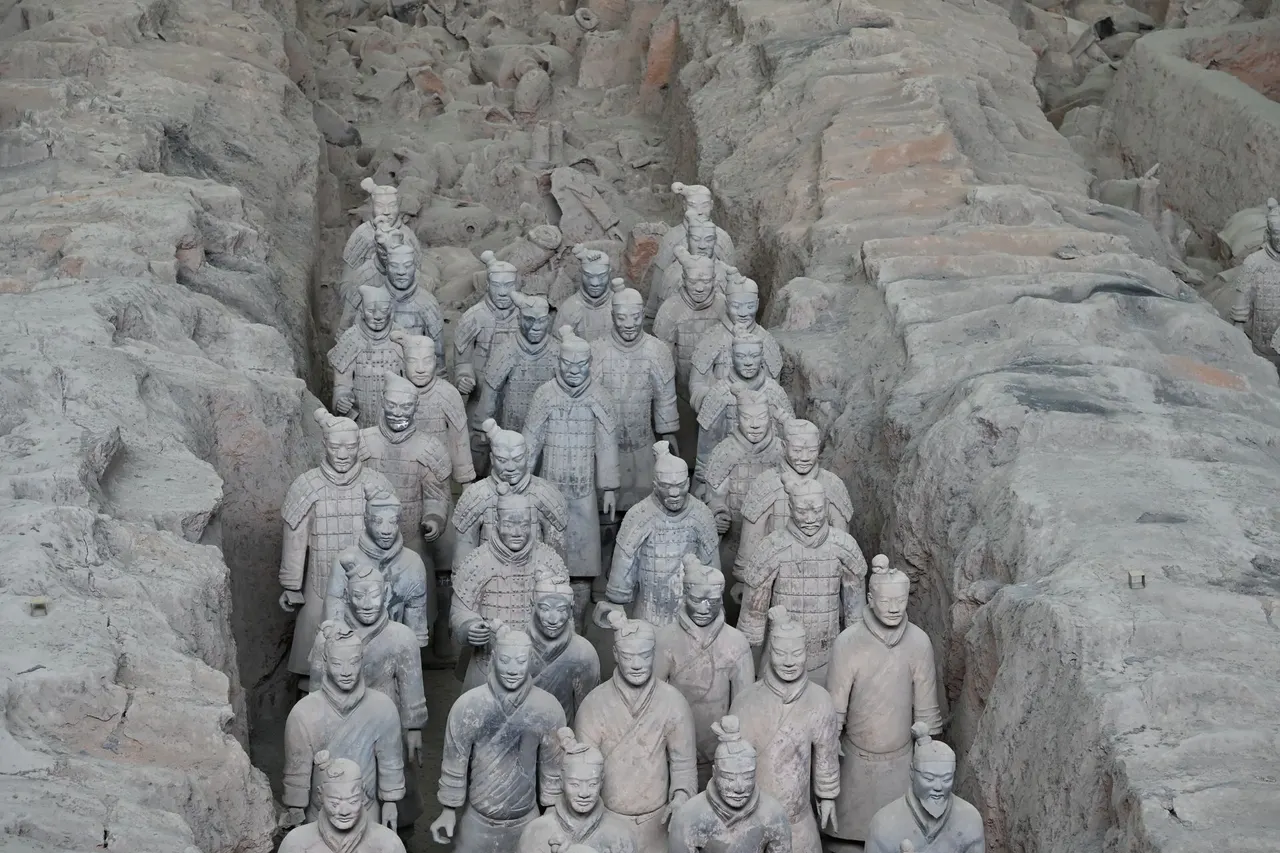
In the spring of 1974, farmers in Xiyang village near Lintong were digging a well. At three metres, the earth gave up a head of fired clay. No one imagined that beneath their feet lay China's largest underground army. Archaeologists arrived, and more than eight thousand figures of Pit One gradually emerged, standing in ordered ranks, facing east.
What stuns you about the terracotta warriors is not their number but that every face is different. Generals, soldiers, kneeling archers — topknots, beards, armour and even the stitching on shoe soles vary. Scholars believe the figures were modelled on real soldiers. In this way, the Qin people kept an army forever at the First Emperor's side.
When they first came out, the figures still wore vermilion, malachite green and azure paint — which flaked off within minutes of touching air. From then on the excavators slowed down, stabilising the pigment before lifting a single piece. In today's restoration rooms, workers clean each shard like surgeons; a single warrior can take years to restore.
Standing before Pit One, you feel a strange quiet. Eight thousand faces look in one direction, as if awaiting a command that will never come. The Qin dynasty lasted only fifteen years, yet through one long dream of clay, it lets us, twenty-two centuries later, still see its ambition and its solitude.