After five sacred peaks, no other mountain; after Huangshan, no mountain at all.
The cloud sea of Huangshan never repeats itself, just as every visitor sees a different mountain.
At four in the morning, Bright Top is already crowded. The sky turns from grey to a line of orange, and the cloud sea ignites layer by layer. When the sun leaps out of the clouds, the whole valley lights up — some people cheer, others fall silent. Seeing the sunrise here is a matter of luck.
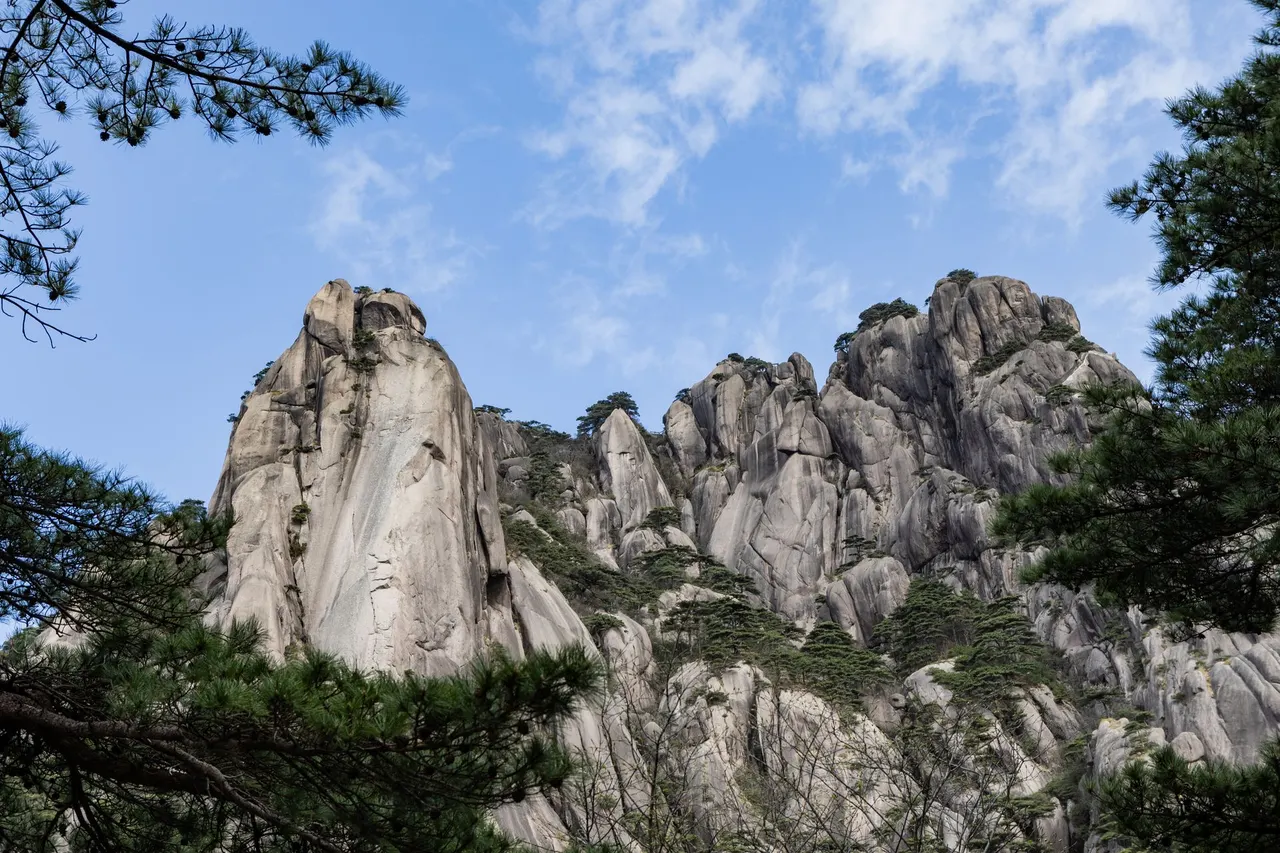
Huangshan's strange pines grow from cracks in the rock. The Welcoming Pine stretches out a long arm as if greeting every guest. People call them living bonsai; really, they just rooted themselves in stone and turned survival into scenery.
Huangshan is famous for its 'four wonders': strange pines, fantastic rocks, seas of clouds and hot springs. The pines twist into extraordinary shapes, while the rocks bear names like 'Monkey Gazing at the Sea' and 'Immortal Pointing the Way'. After rain, clouds pour over the valleys like an ocean, and the peaks float above them like islands. The hot springs, at about forty degrees Celsius all year round, are a perfect reward after a long climb.
The mountain changes with the seasons. In spring, azaleas cover the slopes; in summer, the greenery is lush; in autumn, the forests turn gold and red; in winter, rime ice and snow turn Huangshan into a silver palace. Many people make the trip in winter just to watch the sunrise over a sea of clouds and leave fresh footprints on the snowy boardwalks.
Huangshan is not only scenery but culture. The Ming dynasty traveler Xu Xiake climbed it twice and declared that no mountain under heaven compared to it. Poets left inscriptions on the cliffs, and the Huangshan school of painting made its peaks a chapter in Chinese art history. Below the mountain, the old streets of Tunxi and the ancient villages of Yixian complete a journey through Huizhou.
A little preparation makes the climb easier. The classic route goes up the front and down the back, and cable cars save time; staying overnight on the summit lets you catch both sunrise and sunset. Comfortable shoes and a windproof jacket matter more than anything. The weather on the mountain changes quickly, but every face of Huangshan is worth waiting for.
If you have extra days, the villages around Huangshan are worth a detour. Hongcun and Xidi, both UNESCO sites, lie in the foothills; the old street of Tunxi is the best place to taste Huizhou snacks. Linking the mountain with the ancient villages makes a complete journey through southern Anhui.
The plank path of the West Sea Grand Canyon hangs on the cliff, with clouds beneath your feet. It takes half a day and trembling legs, but when you stand at the bottom and see the sliver of sky falling between the peaks, every step feels worth it.