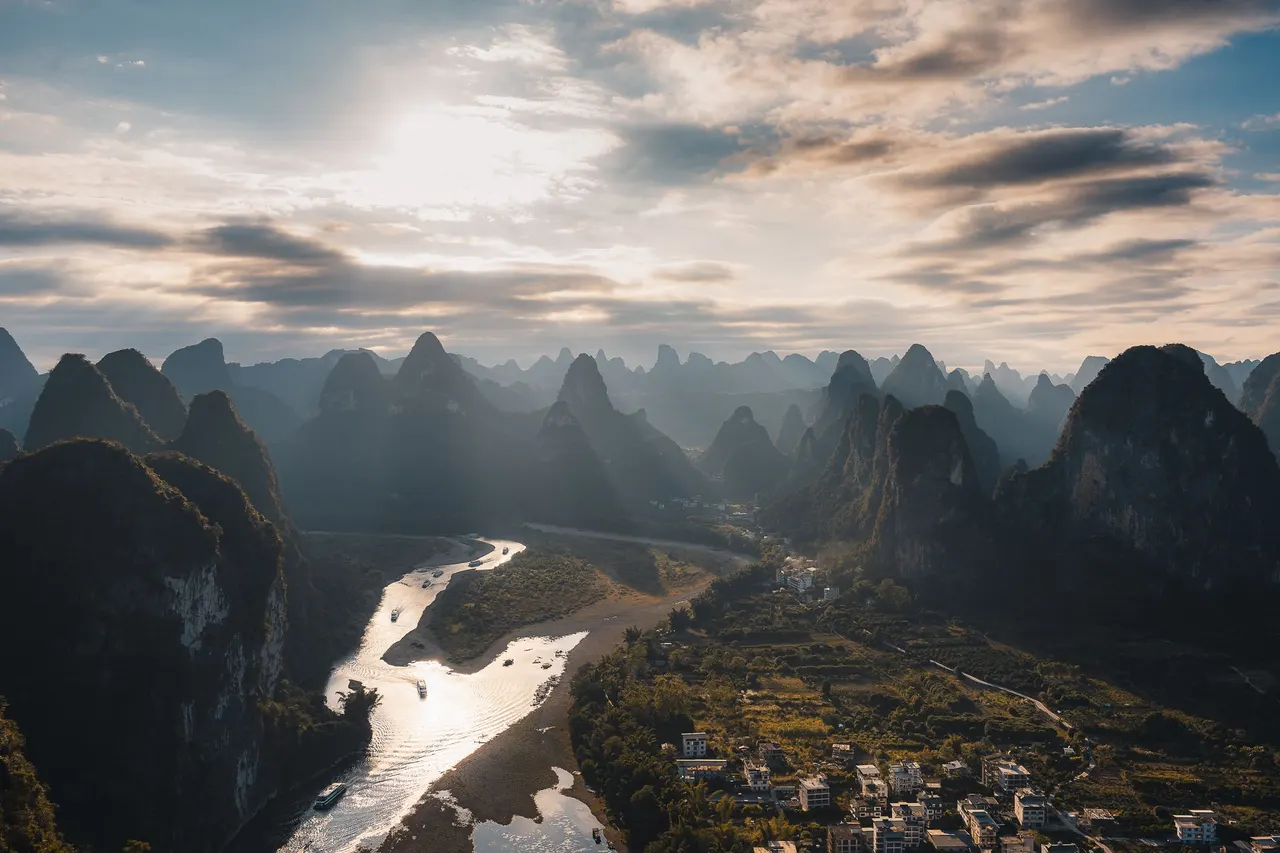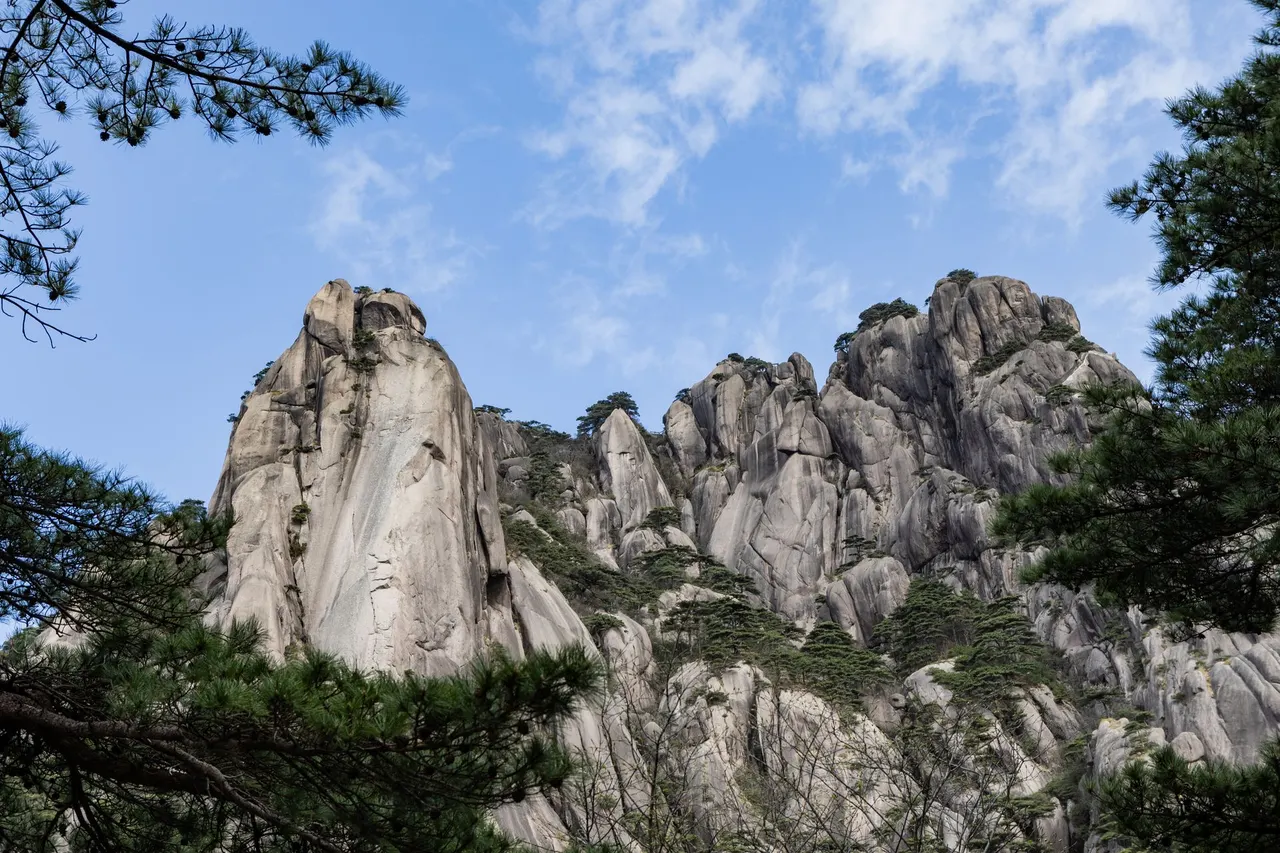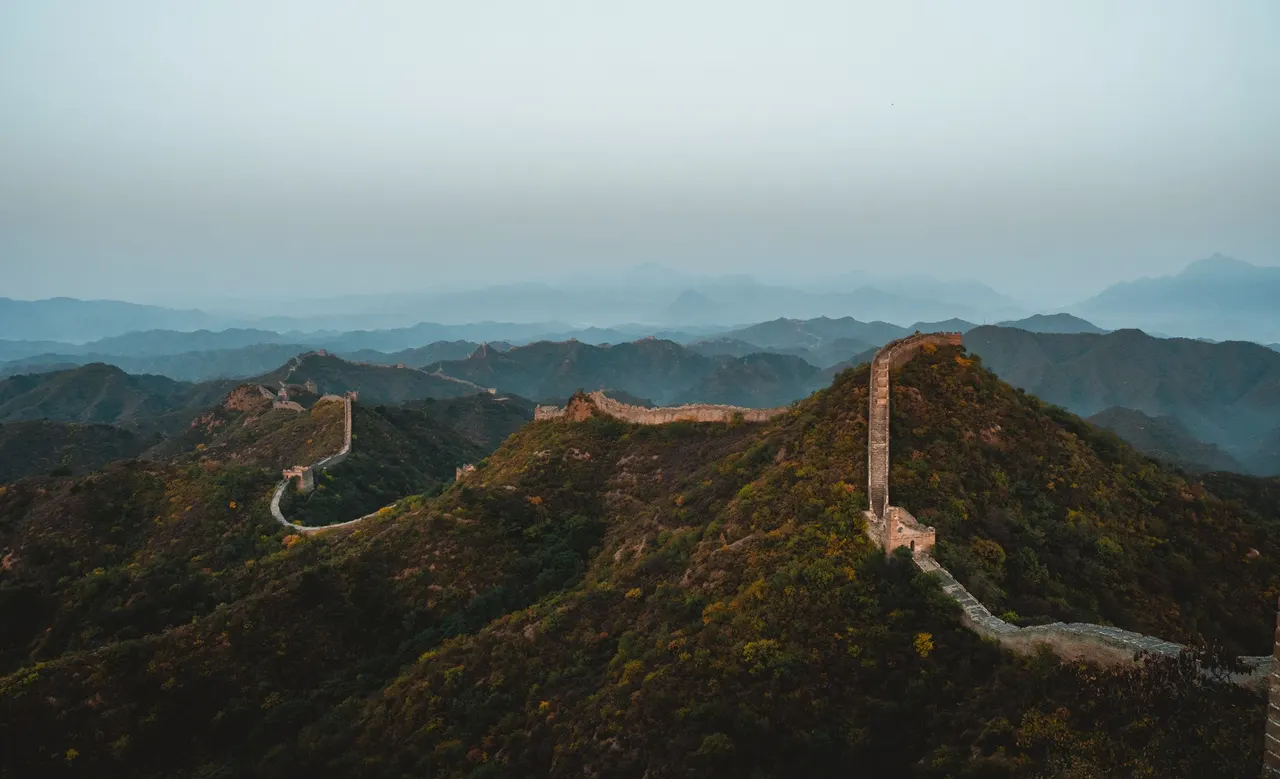
Terraces climb from the foothills to the clouds — five hundred years of dialogue between people and mountain.
The Longji terraces are not scenery; they are letters written on the hillside by the Zhuang people.
In May, when the terraces are flooded, they become mirrors that hold the sky and clouds. Morning light spreads across the mountain, and the whole slope glows, layer upon layer, all the way to the summit.
These terraces were carved by the Zhuang people over centuries, block by block. More than three thousand steps run from the foot to the top, some so steep you can barely stand. People say the fields grow not only rice but the sweat of generations.
The Longji terraces spread across slopes between three hundred and eleven hundred metres above sea level. The two main areas are Jinkeng Dazhai and Ping'an Village: Jinkeng is grand, its terraces climbing from the valley floor to the summit in a breathtaking sweep, while Ping'an offers the famous 'Seven Stars Around the Moon' and 'Nine Dragons and Five Tigers' patterns. Both are worth seeing if time allows.
The terraces grow local red glutinous rice and fragrant rice. In spring the fields are flooded and planted; in summer the seedlings rise; in autumn the grain turns gold; in winter the water rests. Each season paints a completely different picture. After the autumn harvest, Zhuang families thresh and dry the grain in the fields, smoke rising from their wooden houses across the mountain.
The Zhuang and Yao villages of Longji still keep their old ways of life. Stilted wooden houses perch on the slopes, animals below and people above; women in embroidered costumes carry bamboo baskets up and down the mountain paths. In the morning the roosters crow, in the evening smoke rises — life here is simple and solid.
The history of the terraces goes back to the Yuan dynasty. For more than seven hundred years, Zhuang and Yao ancestors built stone walls and terraced fields on the steep slopes, working from the foothills to the summits. With no machinery, only human and ox power, one generation could not finish the work, so the next continued it. The terraces are a sculpture completed by countless hands over centuries.
The villages keep rich folk customs. Singing mountain songs, blowing the lusheng and dancing the bamboo pole dance are the most common sights at festivals; the Zhuang 'Third Month Third' song fair and the Yao King Pan festival are celebrated with enthusiasm. Elders will happily teach visitors a line of song — even if languages differ, laughter is the same everywhere.
Stay overnight in a mountain guesthouse for the full experience. Watch the sunset gild the terraces, wait for the morning sea of clouds to rise from the valley, and taste bamboo-tube rice and cured meat cooked by the family. The mountain roads are winding, so motion-sick travellers should prepare; wear comfortable shoes, because the beauty of the terraces must be walked, step by step.
Stay in a wooden house in Ping'an village and the terraces fill your window. At dusk, cooking smoke rises and mingles with the mountain mist, until you cannot tell smoke from fog. The terraces are beautiful in every season: flooded in spring, green in summer, golden in autumn, snow-covered in winter.