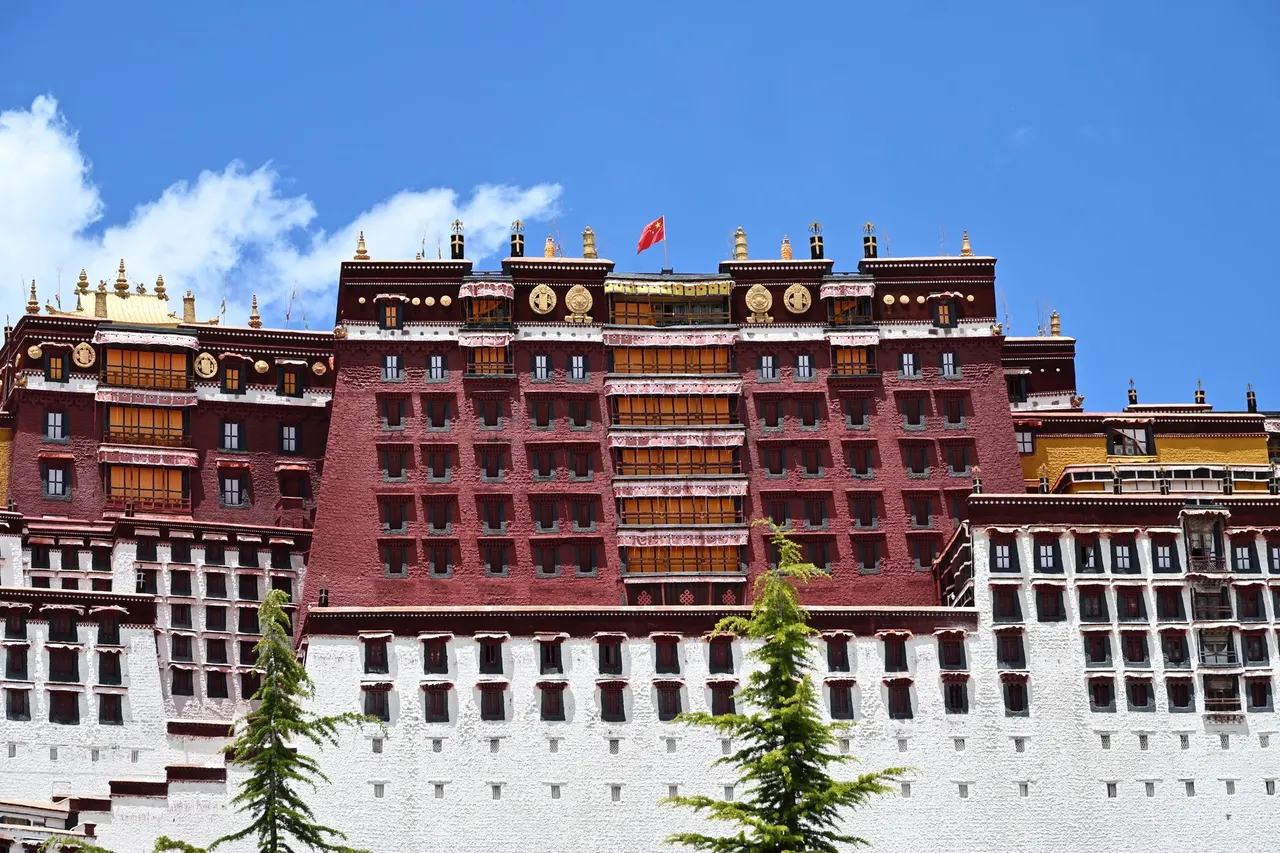
Songtsen Gampo built a palace to welcome Princess Wencheng; thirteen hundred years later, the Potala still stands as Lhasa's highest watch.
The Potala was not built on the mountain — it grew out of it, made of faith.
In the seventh century, the Tibetan king Songtsen Gampo united the plateau and married Princess Wencheng of the Tang dynasty. Legend says he built a palace on Red Hill with a thousand rooms, so that the princess, looking from the direction of Jokhang Temple, could see a home of her own. Wencheng brought a life-size image of the twelve-year-old Buddha, scriptures and craftsmen — the most famous chapter in the history of Han-Tibetan exchange.
Today's Potala has a White Palace and a Red Palace. The White Palace was the winter residence of the Dalai Lamas; in the Red Palace stand their stupas, the fifth Dalai Lama's built with more than three thousand kilograms of gold and tens of thousands of gems. The stairs are steep, the wooden floors polished smooth by pilgrims' feet, and the smell of butter lamps mingled with sandalwood lingers from dawn to dusk.
Every morning pilgrims circle the palace, turning prayer beads and reciting the six-syllable mantra. Some have prostrated their way here from hundreds of kilometres away, their foreheads calloused. For them, the Potala is not a sight — it is a sanctuary they must reach once in this life.
At night the Potala lights up, mirrored in the pond of Zongjiao Lukang Park. Thirteen hundred years later, the story of Princess Wencheng still travels on the steam of butter tea. Palaces grow old, but faith does not — like the prayer flags on the snow peak, it recites people's wishes every time the wind blows.