The home of Confucius, and the spiritual birthplace of Chinese thought.
Every brick of Qufu speaks of benevolence and ritual.
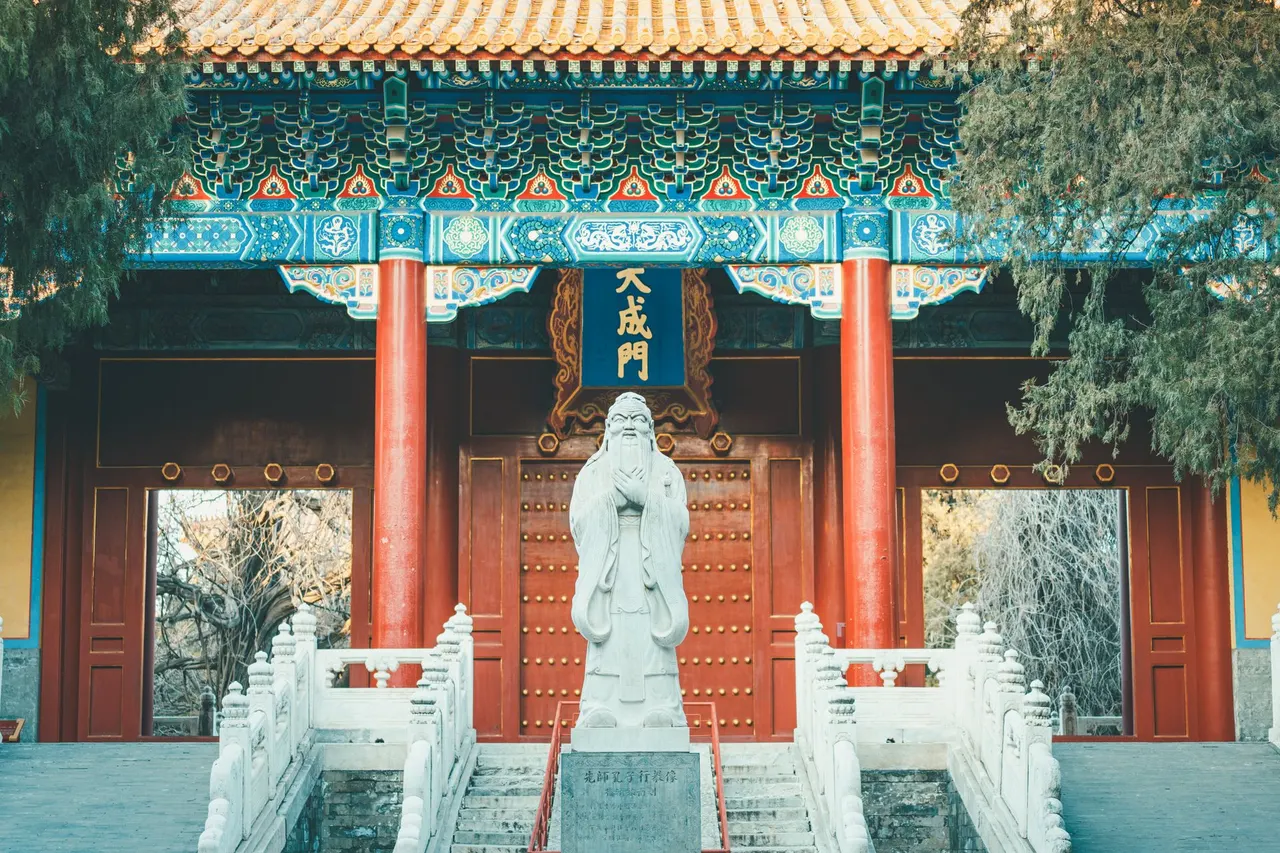
The Confucius Temple in Qufu is one of China's oldest. Inside the Hall of Great Achievement, a golden plaque reads Teacher of Ten Thousand Generations. For two thousand years, emperors and scholars have worshipped here, and Confucius's thought spread from this town across all of China.
The Kong Mansion, home of Confucius's descendants, has nine courtyards and traces of centuries of life. Its couplets praise a family that shares the nation's peace and whose learning matches heaven and earth — an aura of grandeur.
The temple, the mansion and the forest are known together as the 'Three Kongs'. The temple began two years after Confucius died and grew over two thousand years into more than 460 halls; the mansion, home of his direct heirs, is called the 'Number One Family under Heaven'; the forest is the longest continuously used family cemetery in the world.
The scale and rank of the Confucius Temple are rare in Chinese architecture. The Kuaiwen Pavilion was a library; the dragon columns before the Hall of Great Achievement are carved with lifelike coiling dragons, so lifelike that emperors wrapped them in yellow silk when they came to worship. Thirteen pavilions shelter imperial steles from successive dynasties, showing the respect rulers paid to Confucian learning.
The heart of Confucius's thought is 'benevolence' and 'ritual'. Benevolence means loving others: 'Do not do to others what you do not want done to yourself.' Ritual means order: 'Restrain yourself and return to ritual.' For two thousand years these ideas shaped Chinese ethics, education and politics. Many sentences from the Analects remain daily rules for Chinese people today.
The annual memorial ceremony in Qufu has continued for more than two thousand years. Emperors once performed the rites in person; today, on September 28, the birthday of Confucius, the temple holds a grand ceremony with ritual dance, music and offerings. For the Chinese, this is not just ceremony but a tribute to the source of their culture.
Qufu is a small city, but every corner carries the shadow of Confucius. Que Li Street before the temple, the Poetry and Ritual Hall beside the mansion, the Analects stele garden under the old city wall — all are connected with him. Restaurants serve Kong family dishes, shops sell Analects bookmarks, and even the street names carry the words 'rite' and 'benevolence'.
In 1994 the Three Kongs were listed as a UNESCO World Heritage Site. Visitors today can watch the ritual dance, attend a lecture on Chinese classics, or see the 72-metre statue of Confucius at Nishan. No matter how times change, this teacher still stands here, waiting for generation after generation to attend his class.
The Kong Forest is the cemetery of Confucius and his descendants, with more than a hundred thousand ancient trees. At dusk the light softens and crows circle the branches. Walking the stone path, you recall the Analects: isn't it a joy to learn and practise what you learn? Two thousand years on, these words are still recited.