One bite, a satisfying crunch — the boldness of the Northeast is hidden in this sweet-sour pork.
Guobaorou is the signature of northeastern cuisine and the pride of every host.
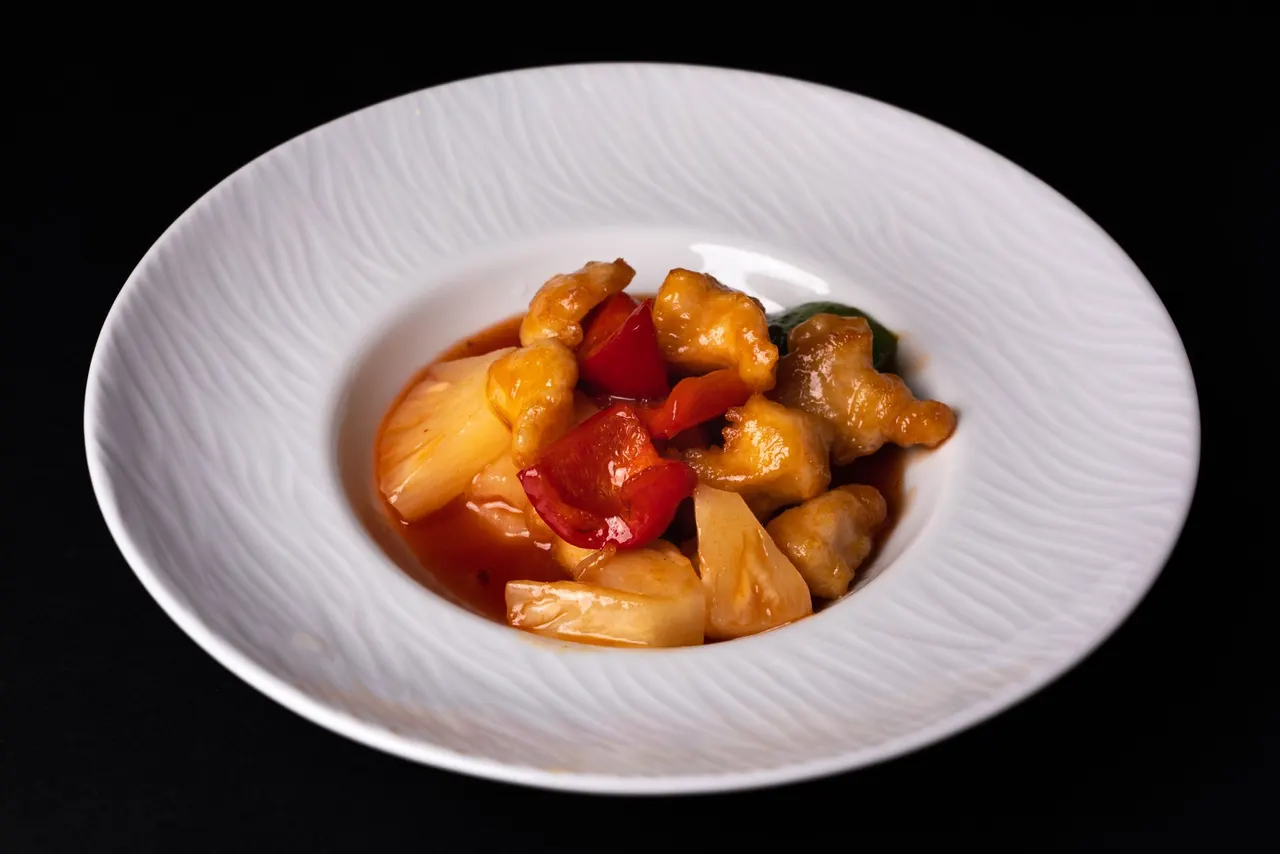
Guobaorou is the most famous dish of northeastern Chinese cuisine. Pork tenderloin is sliced thin, coated in starch, fried twice until golden and crisp, then tossed in a sweet-sour sauce and served immediately. Pick up a piece and it crunches; inside, the meat is tender, and the sauce is bright and balanced.
The dish was born in Harbin. At the end of the Qing dynasty, chef Zheng Xingwen adapted the traditional 'crisp-fried pork' for Russian guests by adding a sweet-sour sauce that suited foreign palates. The dish became known as guobaorou and grew into a northeastern classic.
Authentic guobaorou follows a strict rhythm: fry once to set, fry again to colour, then toss in the sauce. The sauce must coat every piece evenly, neither too thin nor too thick; the meat must stay crisp outside and tender inside, with a satisfying crunch.
In the Northeast, guobaorou is the 'serious dish' of family feasts and banquets. Northeasterners are generous with their tables, and guobaorou is almost always on it. Its glossy red colour and sweet-sour taste please children and adults alike.
Today guobaorou has spread across China, and nearly every northeastern restaurant serves it. But locals still measure it against the one from home: fresh from the wok, still steaming, sauce glistening on the golden crust.
When you travel in the Northeast, order a plate of guobaorou. With a bowl of rice or a cold beer, the warmth and honesty of the region are all in that one crispy, sweet-sour bite.